

Fall is the perfect time of year to add new trees and shrubs to your landscaping. Planting in fall gives trees and shrubs an extra season of cool but sunny weather to focus on developing strong roots before they have to worry about putting out new leaves or fruit, and surviving the hottest days of summer. A robust root system will make them more resilient in the future and help them stay healthy.
Trees and shrubs planted in the fall should be in the ground a minimum of 6 weeks before the first frost, 8 weeks is even better if possible. Our first frost in Bismarck can come as early as late September, so get your new trees and shrubs planted right away.
Here are 7 steps to set your new trees and shrubs up for a long and healthy life:
- Preparing the hole for planting.
Ideally, the planting hole should be about 3 times wider than the root ball, but only just as deep as the root ball. A larger planting hole gives the roots lots of loose soil to grow through near the tree but makes sure the base of the trunk is still safely above the soil level. You want the top of the root ball as close to the top of the soil as possible. If the base of the trunk is lower and you pack dirt around the tree’s trunk, it can cause rot and make your tree susceptible to pests and diseases.
- Position the root ball properly.
When you put your tree or shrub into the hole, the top of the root ball, or flared base of the trunk should be nearly level with the top edge of the hole. You can check this by setting your tree in the hole, and then laying a shovel handle across the hole to see how much higher or lower the root ball should go.
If your soil is likely to settle quite a bit, you may want to raise the root ball, so it is an inch or two higher than the surrounding soil level. Once it settles into the hole, it will then be pretty much level with the surrounding ground.

- Inspect and tease roots to encourage growth.
Before you plant your tree or shrub, have a good look at the root ball. You’re looking for any mushy spots which indicate rot. Rotting sections should be cut out and disposed of. You’re also checking if your new tree or shrub is rootbound. If it is rootbound, you need to break or loosen that up to encourage new root growth. If the roots are tightly packed together in a spiral, they will stay in that formation.
Don’t worry about hurting the roots. Pulling them apart or even cutting them if they’re too rootbound to tease apart, encourages new root growth. If you can tease them apart and loosen them with your fingers, great. If not, get a knife and cut down the sides of the root ball, about an inch deep, and from an inch below the top of the root ball to the bottom.
- Don’t amend the soil.
We often recommend amending the soil to add more nutrients when planting almost all other plants. But, studies have shown that when trees have fertile soil right around their root ball, their roots will not spread very far. Short root systems like this are not very stable. Not amending the soil will encourage the tree to expand its roots to continue searching for nutrients.
- Eliminate air pockets.
After you’ve loosened the roots, you may end up with air pockets when you place your tree or shrub in the hole and start to fill. Air pockets can cause sections of roots to dry up and die, so you want to eliminate them as much as possible.
The first way you can do this is to build a cone of soil in the planting hole and place the root ball over this to ensure the soil gets up into the roots. This is a good idea if you’ve loosened the roots a bunch and lost a lot of soil.
Next, start to backfill your planting hole, while someone holds the tree straight. When the hole is halfway full, fill it up with water, and then let that drain before you finish backfilling.
Once you’ve finished filling the hole, tamp the soil down around the roots well with your heel or a tamping tool.
- Add Mulch
Mulch is the new tree or shrub’s warm winter blanket. A thick layer of mulch, 2-4” deep, helps to insulate the roots, regulate soil temperature, and retain moisture. It’s important to add mulch because the worst time of the year for new trees is that freeze and thaw cycle in the spring, which can cause the cells in plants to burst. Mulch ensures the root area of your tree thaws slowly, steadily, and safely.
- Water religiously.
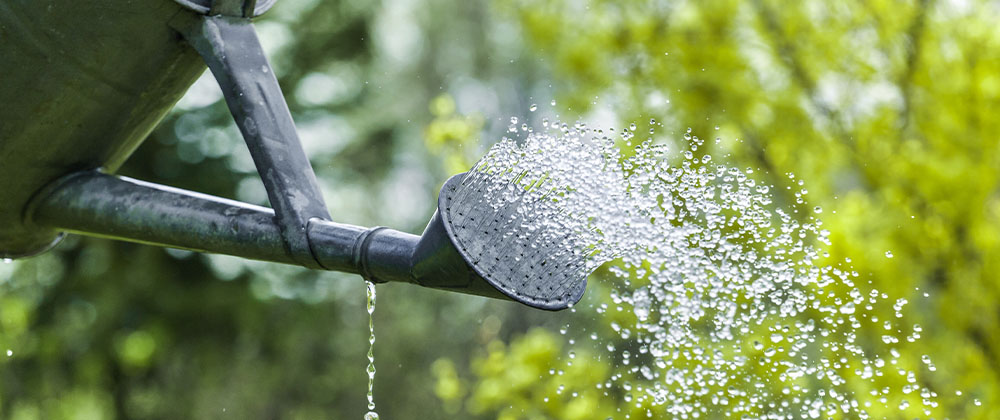
Watering your new trees and shrubs is critical for getting them established, and you’ll need to be vigilant about doing so for at least the first year. Soaker hoses are your best friend. Lay them out in a spiral over the root area of trees and shrubs.
- Week 1-2: water every single day
- Week 2-4: water every other day
- Week 3-10 (or until the ground freezes): water every 2-3 days.
- Spring: start watering once per week as soon as the ground begins to thaw, and continue for the rest of the year.
Trees and shrubs are an investment; you don’t want to be replacing them in a year or two because they got planted wrong or were neglected. Good planting prep and consistent water in the first year will set your trees and shrubs up for a lifetime of beautifying your yard.