

Fall is one of the best times of year to add landscaping features like shrubs and trees to your yard. Planting in fall gives these plants an extra few weeks to focus their energy on establishing strong roots instead of having to split energy between growing leaves, roots, and berries.
We’re going to focus on shrubs today because they are such a versatile part of your landscaping. From large and dense, evergreen to deciduous, flowering or not–there are many shrubs that grow really well here in Bismarck.
But how do you choose which shrubs to add to your yard? There are so many things to consider. One way to narrow the list down is by choosing a season of interest. If your yard looks a little bleak and monochrome in winter, you might want to add a shrub with winter interest, like an evergreen that features bright-colored berries. If the fall colors in your yard seem to revolve around yellow, you might want to add something with foliage that changes to shades of red in the cooler months.
Here are a few great landscaping shrubs, organized by their season of interest.
Shrubs for Spring Color
Lilacs are a classic spring-blooming shrub that seems to grow anywhere. These hardy shrubs are deciduous and are loaded with cones of pretty flowers in early spring. The flower colors include varying shades of white, pink, and purple. Lilacs require very little care, but you will need to stay on top of cutting back suckers every year, or they’ll eventually take over the place.

Forsythia are one of the earliest blooming spring shrubs. Before their leaves come out they produce masses of cheerful bright yellow flowers. They are so vibrant they almost seem to glow, and they look like big effervescent clouds of sunshine. Forsythia are deciduous and they make a great option for hedges, getting as large as 8-10 feet tall, and 10-12 feet wide.
Daphne is a deciduous early spring flowering shrub that also has multi-season interest. It features beautiful and fragrant flowers, usually in pink or white, followed by red berries. Daphne is easy to grow and drought-tolerant, but the whole plant is poisonous, so don’t let people or pets nibble on the berries, leaves, or branches.
Shrubs for Summer Color
Summersweet is a deciduous shrub that features flower-covered racemes up to 6 inches long. Blooms are usually white, pink, or rose-colored, and have a delightfully sweet fragrance. Summersweet is an excellent shrub for the front yard as it is quite tolerant of urban air pollution and salt from the streets.
Ninebark is a versatile deciduous shrub with multi-season interest. It features clusters of white or pink flowers in early summer and has red berries that are popular with birds through the summer and fall months. Many varieties feature uniquely colored leaves, and in the winter, the peeling layered bark is eye-catching.
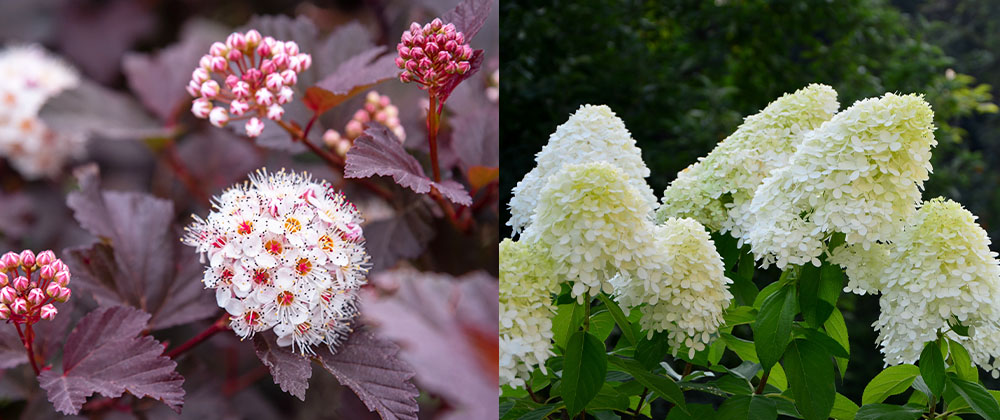
Hydrangeas are a gorgeous deciduous shrub, with large clusters of pretty flowers through the summer. Bismarck is USDA Zone 4, so hardy hydrangeas are best suited for our climate; this includes some paniculata types and most of the smooth hydrangea varieties. Hydrangea flowers will also add fall, and sometimes even winter interest if left to dry on the stem.
Viburnums are a deciduous shrub with white flowers in the summer. Once the blooms fade at the end of the summer, they’re replaced by red or sometimes blueish-black berries and charming red leaves. Nannyberry and Arrowwood viburnums are hardy varieties that are appropriate for our climate.
Shrubs for Fall Color
Barberry is a deciduous shrub that really embraces the jewel tones of fall. Its leaves turn shades of red, orange, yellow, and purple. They also have large red berries that will hang on for a long time, providing winter interest as well. Barberry is low maintenance and fairly deer-resistant.
Burning Bush is aptly named for its brilliant red fall foliage. This deciduous shrub is quite dense, and it also features red berries that hang on through winter. All parts of the burning bush are toxic and will make people, dogs, and cats sick; however, they are safe for the birds to feed on.

Spirea is a great multi-season interest shrub. These deciduous shrubs create smaller mounds of pretty leaves and flowers in summer and beautiful fall colors. Different varieties feature different leaf colors, from red to gold to purple. Spireas are low maintenance and are a great option for smaller spaces.
Highbush Blueberries give you a double bang for your buck. They have striking bright red leaves in the fall, and they give you lots of delicious fruits in the summer. Blueberries will produce better fruit if you have two or more varieties planted near each other. These plants need to have acidic soil to produce well, so it’s best to test your soil every year and amend with products like garden sulfur as needed.
Shrubs for Winter Color
Winterberry adds a bright pop of color to an otherwise fairly monochrome winter. This deciduous holly is loaded with bright red or orange berries that last all through fall and winter. They may even last until spring, though the birds will eat them eventually.
Juniper is a large and varied family of coniferous evergreen plants, with approximately 60 different species of trees and shrubs. They’re tough as nails, surviving northern winters, droughts, and the heat of summer. Female plants are the ones that produce the berries, which are used to flavor gin. Colors vary widely, but some of the most popular shrub types feature icy-blue-green needles that contrast beautifully against darker evergreens and snow in the winter.
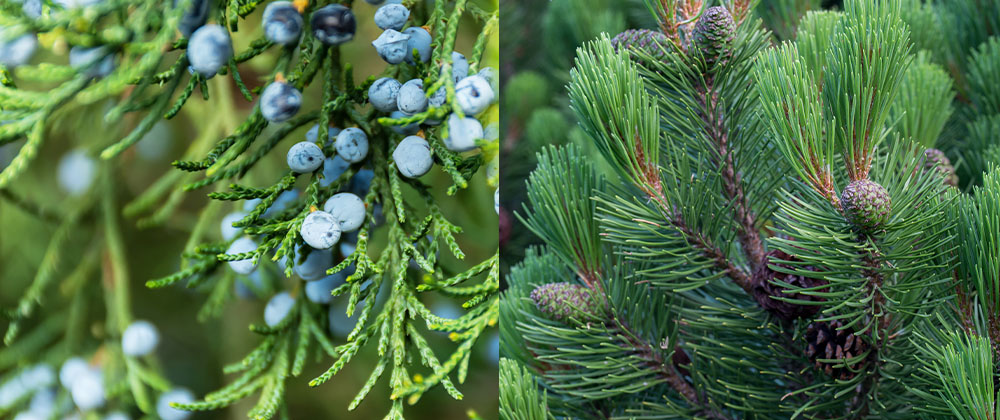
Mugo Pines are hardy and relatively small coniferous evergreen shrubs. There are even dwarf varieties that stay under 3 feet tall. These tough little shrubs grow slowly, so they can be planted in fairly tight spaces or can be given lots of room to spread. Eventually, they may spread up to 10 feet across, though that will also take about 10 or so years.
Red Twig Dogwood is a deciduous shrub that adds another color pop to the yard in winter. These multi-stemmed shrubs make a big impact when planted in larger groups. Their leaves turn red in the fall, and then when they drop, they reveal a beautiful cluster of rich red twigs that stand out against snow and evergreens.
The best part about choosing shrubs based on their season of interest is that there’s always something beautiful to look at in your yard. Popping a few of these shrubs into your landscape will add value to your property, food and shelter for birds, as well as boost your garden’s ecosystem!