

There is a famous quote that says something along the lines of ‘roses do not bloom in a hurry; for their beauty, like any masterpiece, takes time to blossom.’ And it’s true! A rose bush can be tricky to plant and care for, and they require a little bit of patience, but oh, the outcome is so worth it! Roses have a bit of a challenging reputation, but many modern varieties are surprisingly hardy and easy to care for. Really though, why wouldn’t you want to take a little extra love and care to nurture the beautiful rose? Here’s a brief guide on how to plant and take care of a rose bush.
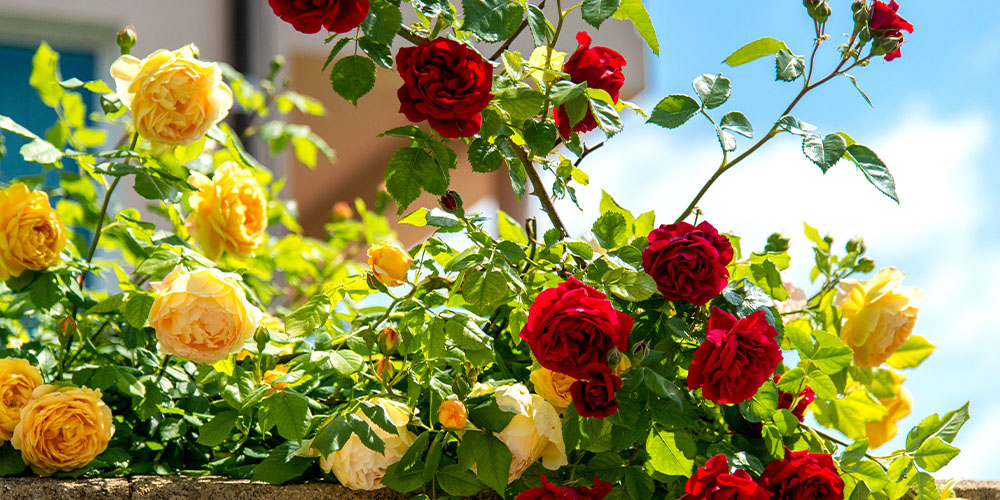
How to Plant a Rose Garden in North Dakota
You may hesitate at the idea of trying to plant a rose garden in North Dakota but they really can flourish if planted in the right conditions and if you take care of them properly. The trick to growing roses here is selecting one of the more hardy varieties that can tolerate our harsh climate. Canadian Morden roses, for example, are a shrub rose that tolerates our climate quite well. Easy Elegance roses are both quite hardy, as well. When you purchase your rose shrub, be sure to select a large, healthy-looking plant and take extra care to place it in full sun whenever possible—and don’t forget winter protection! Our climate gets cold, and even the hardiest rose enjoys winter protection, especially when newly planted.
How to Water Your Rose Bush After Planting
Similar to the other plants in your garden, you should water your established roses at least once a week. When you water your rose, it is ideal to water the soil directly rather than the plant itself, as wet leaves are susceptible to problems like mildew, black spot, rust, and other common pests. If soil drainage is good, then your newly-planted roses will be happy with water every two to three days, depending on weather conditions.
How to Keep Roses Blooming
If you want to know how to enjoy rose blooms all summer long, take extra care to feed those beauties correctly throughout the growing season! By replenishing your soil with compost and organic fertilizer in the spring and then again in the summer (after their initial bloom period after planting), your rose bush should continue blooming quite stunningly. Your first fertilizer application is best applied right at the beginning of spring, and then another in mid-June and July is ideal. Deadheading is also a must if you want to encourage new blooms—simply prune back the spent blooms to redirect the plant’s energy into new flowers (read more on this below).

When Should Rose Bushes Be Pruned?
After you plant your rose bush and get it flourishing with all the proper nutrients, pruning will also help to encourage bloom production. This is how to take care of pruning your rose bush after planting most effectively. Either late winter or early spring is the best time to prune roses. You will want to limit your pruning to diseased, damaged, and dead branches throughout the growing season. Paying attention to the nodes of your rose plant as you prune will help determine the shape of the regrowth; if you want a branch to grow out and away from the center of the rose bush, cut above an outward-facing node. But, if you want regrowth toward the rose bush, cut above an inward-facing node. Also, try to make diagonal cuts whenever possible; it helps with runoff and is generally just more attractive.
Do Spent Rose Blooms Need to Be Deadheaded?
Deadheading spent flowers will also help with bloom production. After the petals have faded away, you can snip the leftover flower at the nearest leaflet. You can stop deadheading in the fall, though, as that is when rose plants prepare for winter. Once winter frost has hit, it’s safe to prune back the rose bush more heavily. Many rose enthusiasts cut their plants down to a one-foot height once frost arrives; this encourages bushy, uniform growth next spring.
These basic tips on how to take care of a rose bush will apply to most all varieties. Still, it does help to remember what particular cultivar you are growing so that you can learn all of its particular eccentricities. For example, miniature roses and climbing roses’ needs will differ slightly from the shrub varieties. Some are less hardy in our Midwest winters, so they might need a little extra attention and winter protection. If you’re on the hunt for rose bushes for sale in Bismarck, stop by Plant Perfect to see what we’ve got in stock! We’d be happy to answer any more burning rose questions you might have before you plant.