
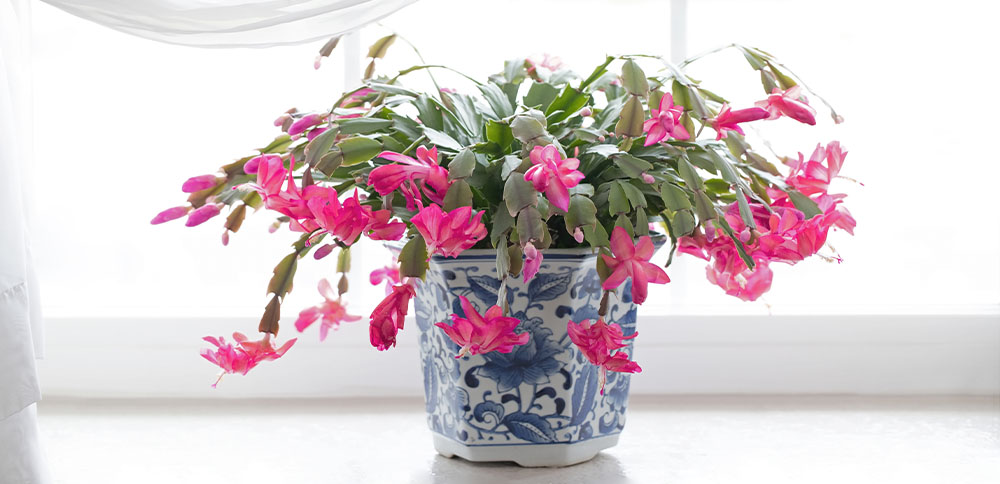
Do you have a holiday cactus, but you’re not sure how to get it to bloom again? Whether you’ve got a Thanksgiving Cactus, Christmas Cactus, or Easter Cactus, they all have similar care requirements. While they’re called cacti, they’re not quite the same as the cacti that live in actual deserts. Here are 10 tips for how to set your Christmas cactus up for a happy life and lots of blooms.
What Your Christmas Cactus Needs To Thrive
1. Plenty of bright, natural light, but not direct sun. Christmas cactus will bloom best in a room with lots of bright light but not direct sun.
2. Weekly soil checks to see if they need water. Technically holiday cacti are epiphytic, so their roots need to be able to breathe. Allow the soil to dry out between waterings, and dump any excess water in their drip trays.
3. Cactus soil mix. Christmas cactus roots need to breathe, so a porous cactus mix in a planter with good drainage is best to help them avoid root rot or stem rot.
4. Daytime temps around 65-75 degrees. This is the ideal temperature range during the day to help them thrive.
5. Good humidity. Christmas cacti originate in rainforests, so they like plenty of humidity. Use a pebble tray under your pot, or run a humidifier nearby.
6. Fertilize during the growing season. A cactus fertilizer applied once per month through spring and summer will help them thrive and be ready for the blooming season. Stop fertilizing in July or August.
Christmas cactus will bloom best in a room with lots of bright light but not direct sun.

7. Cool overnight temps and darkness for blooming. About 6-8 weeks (usually Late September to October) before you want your cacti to bloom, you might need to adjust their environment. Darkness for 12-14 hours overnight, lower nighttime temperatures around 55º, and less watering will help encourage your holiday cactus to start setting buds. This doesn’t have to be as complicated as you might think. Try to position them in a place that gets good darkness overnight, away from heat registers, and not in the warmest room of your home. If you have curtains or blinds in the room the cactus is in, close them overnight to make it darker. The darkness matters more than the temperature, so don’t worry about temperature as much.
8. To be left alone when buds start to form. Drastic changes in temperatures, humidity, light, and movement can stress them out and cause them to drop buds.
9. Annual pruning to keep them tidy. You can prune holiday cacti annually to help a plant grow bushier, more balanced, or just to keep from getting too huge. Wait until a few months after it’s done blooming, then snip between leaf segments. You can safely remove up to one third of the bulk of the plant per year. You can keep the clipped leaves and propagate them into new plants if you’d like.
10. Check your holiday cactus regularly. When you do your weekly check to see if your cactus needs water, give the plant a quick look over to check for signs of stress, disease, or pest infestations. Some of the main issues for Christmas cacti can be:
- Leaves that are wilting, rotting, or shriveling up. Usually, this is caused by overwatering. If you notice this, you should consider repotting it into a terracotta pot. Remove as much soil as you can from the roots, and give it fresh cactus soil.
- Fungus gnats can be attracted to soil that is too damp, so lighten up on the watering. You can use yellow sticky traps to catch the gnats, or repot your cactus into fresh, dry soil.
- Red leaves on a holiday cactus mean it’s getting too much sun or not enough water. If it’s near a window that gets lots of sunshine, move it back away from the window. If it’s not near a window, it probably needs to be watered.
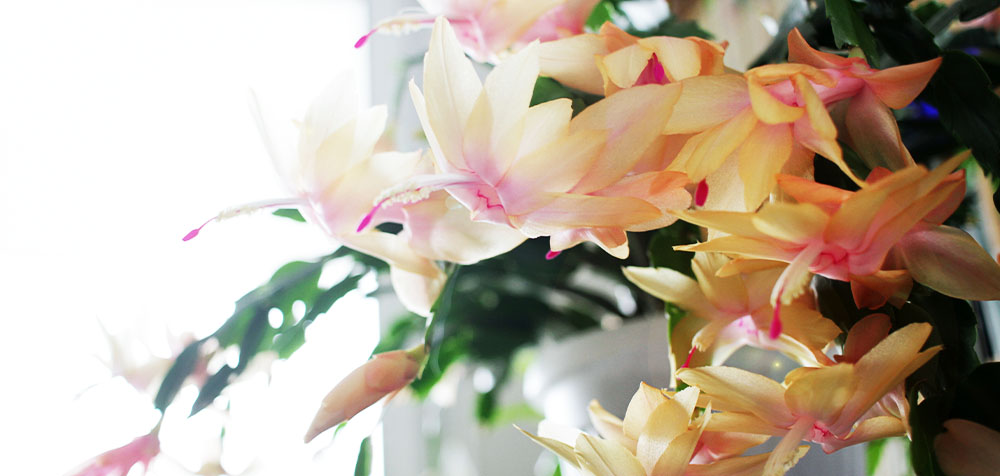
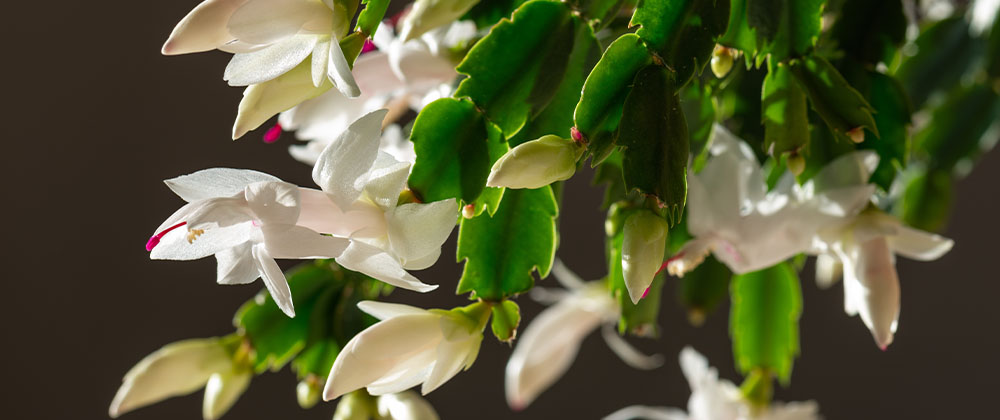
Now that you know how to care for them, why not add a Christmas cactus to your houseplant collection! Stop by the garden center, we’ve got plenty of beautiful ones to choose from, in a variety of colors!