

Plant pests are a pain in the you-know-what. Plants thrive best when you can closely recreate their natural living environment in your home. Unfortunately for tropical plants, it can be challenging to maintain their ideal environment, especially over winter when indoor air tends to be so dry.
Spider mites are among the most common pests that show up when the air is too dry around your plants. You can identify and prevent these pests on your indoor plants with these tips.
What Are Spider Mites?
Spider mites are teeny tiny little critters related to spiders that love a hot and dry environment. They’re usually about the size of a period at the end of a sentence. They have an average lifespan of 30 days, and females can produce up to 100 eggs in that time.
The baby mites mature quite quickly after hatching, and they can multiply very fast once they get started. Spider mites feed on the chlorophyll in plants by puncturing the plant.
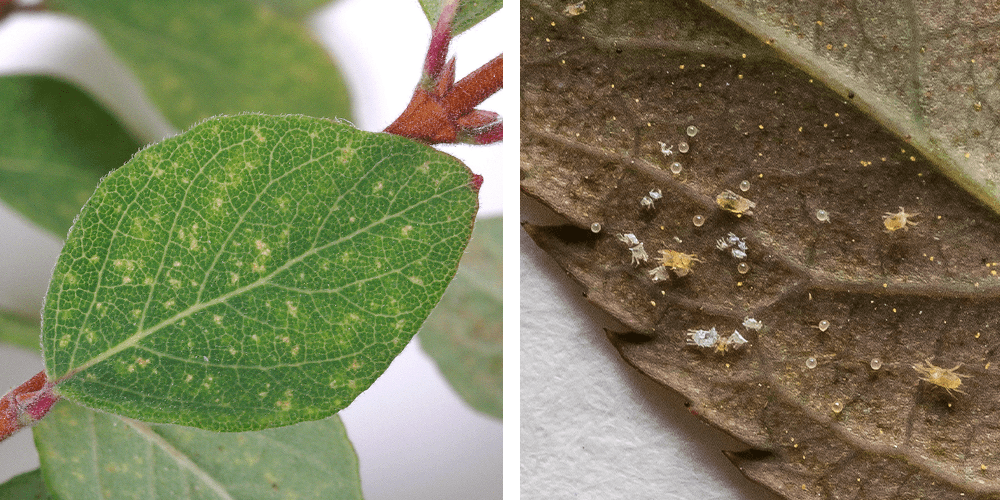
How to Identify Spider Mites
The most common way to identify spider mites on your indoor plants is to look for webbing on your plants. It’s usually in the crooks where branches meet other stems or under leaves.
Other signs of spider mites are tiny white dots or specks on your leaves, called stipples, and it’s the result of their feeding on the leaf. An extreme infestation will also cause yellowing and then browning, and eventually the death of the leaves.
Spider mites are among the most common pests that show up when the air is too dry around your plants.
How to Prevent Spider Mites
The best way to prevent pests on indoor plants is to keep a close eye on your houseplants. Closely inspecting them regularly, about once a week, will help you identify any pest infestations early so you can tackle them.
But, other than monitoring them, there are also other things you can also do to help protect your indoor plants from these annoying pests.
Spider mites love a dry, hot environment. They are pretty common in homes in North Dakota during the winter months, particularly if your plants are near heating vents. So, the first thing you may want to consider is moving your plants away from heating vents for the winter, so hot drafts aren’t blowing directly on their leaves. It will help keep them from experiencing extreme temperature changes, which can stress the plant out and make it more vulnerable to pests.
You can also help prevent pests on indoor plants by giving your plants extra humidity during the winter. You can raise humidity levels in a few ways:
- Grouping plants together.
- Adding pebble trays underneath plant pots.
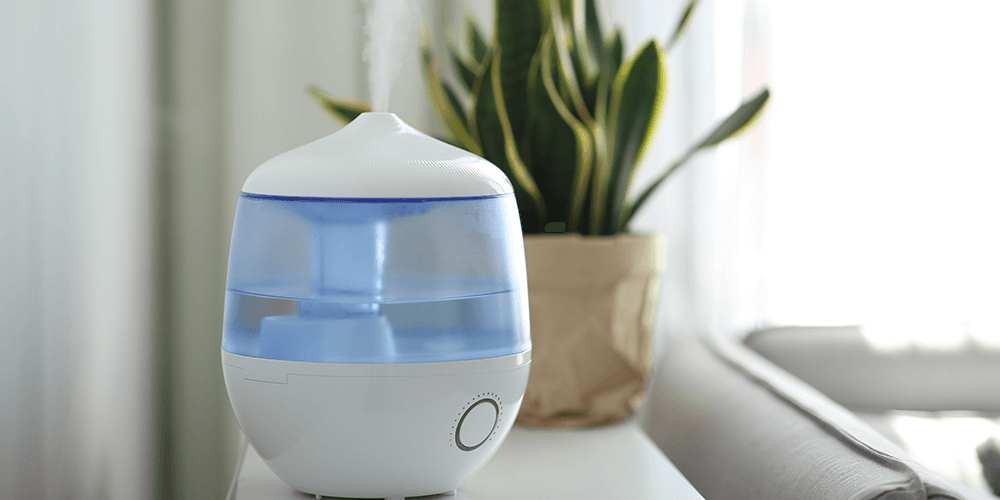
- Running a humidifier near your plants.
- Misting your plants daily.
Grouping your plants creates a little microclimate. They make a mini forest canopy with their foliage, which helps retain moisture. Pebble trays underneath, filled with water, will evaporate over time to increase humidity in the area.
Keep an eye on your pebble trays though, the water will probably evaporate faster than you expect, so you may need to top them up every 2-3 days. And running a humidifier in the area puts humid mist directly into the air around your plants.
Misting your plants daily helps a little bit, but it’s not as effective as a combo of humidifiers and pebble trays. For misting to really raise the overall humidity, you’d need to do it many times throughout the day.
How to Solve Spider Mite Problems
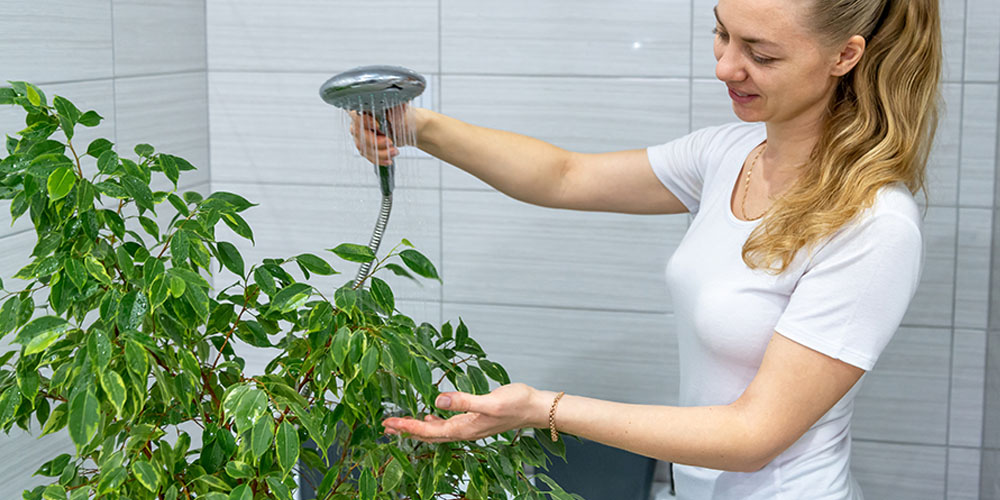
The best way to get rid of spider mites is to spray them off with water every 5-7 days. You can do this with a spray bottle of water on smaller plants, and on larger plants, you could take them to the sink or shower and spray them off that way. If you’re doing them in the sink or shower, make sure the spray is gentle, and the water is tepid or lukewarm, so you don’t shock your plants with icy cold temperatures.
You need to be really thorough, making sure you’re spraying off every leaf, top and bottom, and all the nooks and crannies on the stems and limbs. You’ll have to be persistent and keep this treatment up for several weeks to make sure you get any new ones that have hatched since your last cleaning.
If you spray your large plants off in the shower or sink, you may need to adjust your watering schedule for a few weeks, since showering them off will also get the soil fairly wet. Consistently wet soil can cause a whole other host of problems, and attract other pests.
If you have a plant with huge leaves and smooth stems, you could also use a damp cloth to wipe down the stems and leaves of plants. This can be a good follow up option after your first treatment to prevent overwatering.
There are also beneficial predatory mites you can get that will take care of spider mites, but they can be hard to get in the winter because they can’t be shipped in cold weather. You can also use insecticidal soap for infestations that are out of control, but you’ll still need to apply it a couple of times over a few weeks.