

When you spot bugs in your garden, it can be tempting to shriek and try to get rid of them immediately. Instead, we suggest a slightly different approach! While there are most certainly some bad bugs that can be rather destructive in your garden, there are some really good bugs out there, too!
How to Tell the Difference Between Good Bugs and Bad Bugs
A huge percentage of insects are either beneficial or pose no real threat to your garden. They are, after all, just part of a larger ecosystem, and most of us know that insects play a big role in the ‘circle of life!’ But often, it can be hard to tell the difference between bad bugs and good bugs if you don’t know what you’re looking for.
The first step to take when you notice bugs in your garden (or on your houseplants, for that matter) is to stop and observe them. If you can, taking a photo may help you identify them as well. Whether it’s one or many, if it is eating and seems to be causing a lot of damage in the process, chances are you’ve got a problem on your hands. With that said, large numbers of insects on your plants are also often indicative of a pest infestation.
After observing and potentially photographing your new little friend (or foe), the second thing to do is to dive into a little bit of research to identify them. Many great online resources offer images, descriptions, and characteristics of garden insects that should help you crack the case. That picture, or even a tiny bug hostage, will help you in your search.
A Few Bad Bugs to Watch Out For

Japanese Beetles: These invasive little guys definitely fall into the ‘bad bug’ category. While their numbers remain relatively low in North Dakota, Japanese beetles are pretty destructive pests that will feast on foliage and flowers. They start on the outside and work their way in, leaving a sad skeleton of leaf veins in their wake. They are about half an inch long with metallic green bodies, bronze-toned wings, and they have little white tufts that run along either side of their bodies.
Mealybugs: These guys are also quite damaging in the garden and can be difficult to mitigate if you don’t catch them early enough. Mealybugs are most easily identifiable by the white, cotton-like substance they leave behind. They tend to hide in unsuspecting places like under leaves and tiny crevices along a plant’s stem. This bad bug has a sort of pinkish-purple body, but they usually look like they are white as they cover themselves in that cotton-like wax we mentioned earlier. They’re pretty tiny (only about a 20th to a 5th of an inch), and they lay hundreds of eggs in tiny little white sacs.

Aphids: The small but mighty aphid is definitely on the ‘most wanted’ list! They literally suck the life right out of your plants, eventually causing them to wilt and die. They also secrete a substance that attracts ants and promotes fungal growth. Lovely, huh? On the bright side, they are also a favorite meal item for our first beneficial bug—ladybugs!
Bugs that Deserve a High-Five in the Garden
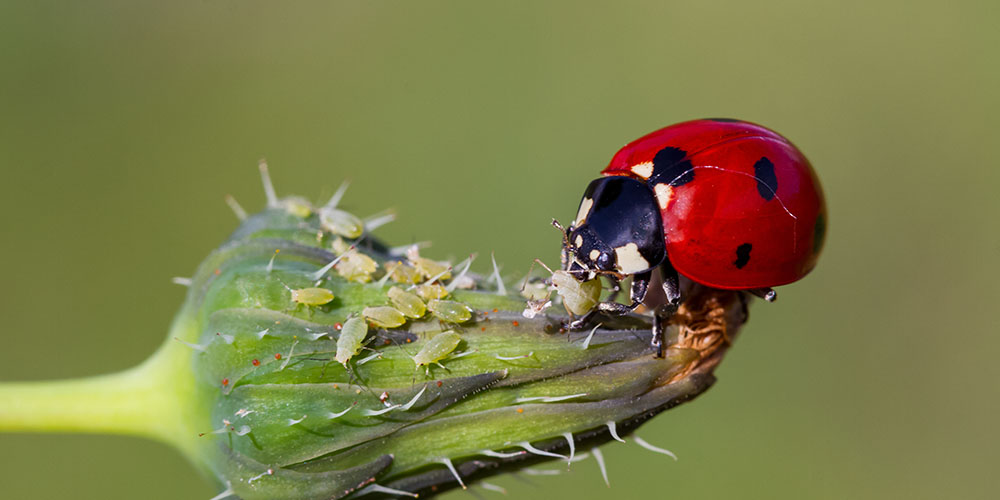
Ladybugs: While they may look all innocent and cute, ladybugs are fierce little predators in the best way possible! Without a doubt, a good one to have in the garden, ladybugs are well-known for preying on common pests like aphids, thrips, mites, and mealybugs. However, what many people don’t recognize are the juvenile ladybugs, which look almost like teeny-tiny black lobsters with reddish-orange markings. If you see these, leave them be—they’re even better hunters than their spotted parents!
Lacewings: Another good one to have around, lacewings also tend to feed on many of the more annoying garden pests. So much so that they are often purposely introduced for the purpose of natural pest control. Lacewings are green, slender-bodied insects with oval-shaped transparent wings. They may be a little less adorable than ladybugs, but they are no less beneficial!

Mason Bees: Most of us are aware that bees have an essential role in supporting our ecosystem, but Mason Bees are like workhorses of pollination. As a solitary bee species, they dedicate their entire existence to pollinating and are way more efficient than many other bee species like the honeybee. Mason Bees tend to be less fluffy than Honey Bees with dark blue bodies.
So, now you know! While there are plenty of creepy crawlies that should be managed and controlled, there are also others who are doing wonders for your garden. If you’re still not sure about whether your garden has been graced with a good bug or a bad bug, stop by our Bismarck garden center! Our in-house experts would be happy to help you identify it and decide on the best course of action.