
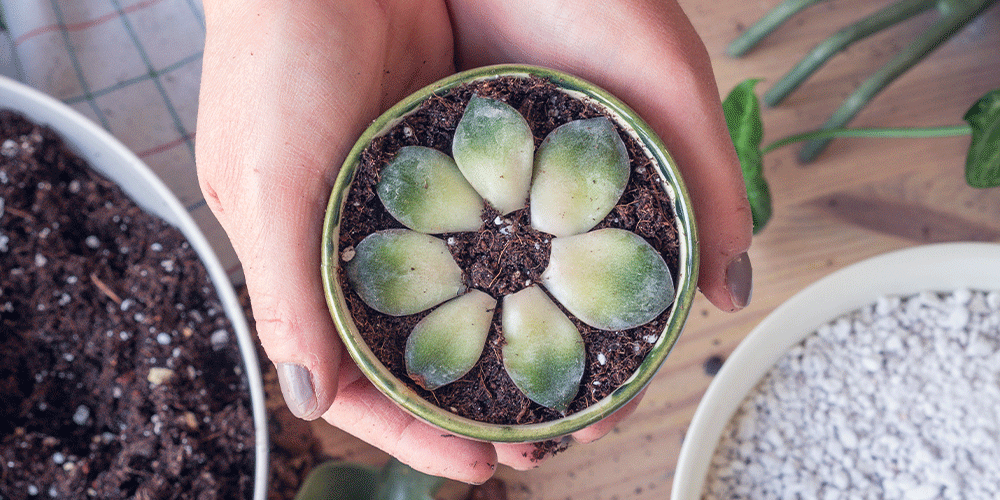
Some plants are so beautiful, we wish we could clone them and put one in every room. Fortunately, unlike people and animals, many plants are shockingly-easy to clone—the technology is already built right in! Using propagation, you can grow a whole new houseplant from your existing ones!
Whether you’re a seasoned plant enthusiast or a budding green thumb, this comprehensive guide unlocks the secrets of successful propagation, offering insights into the art of creating new life from your favorite succulents and houseplants. Join us as we delve into the fascinating world of plant propagation, empowering you to expand your botanical haven with confidence and expertise. Let the propagation adventure begin!
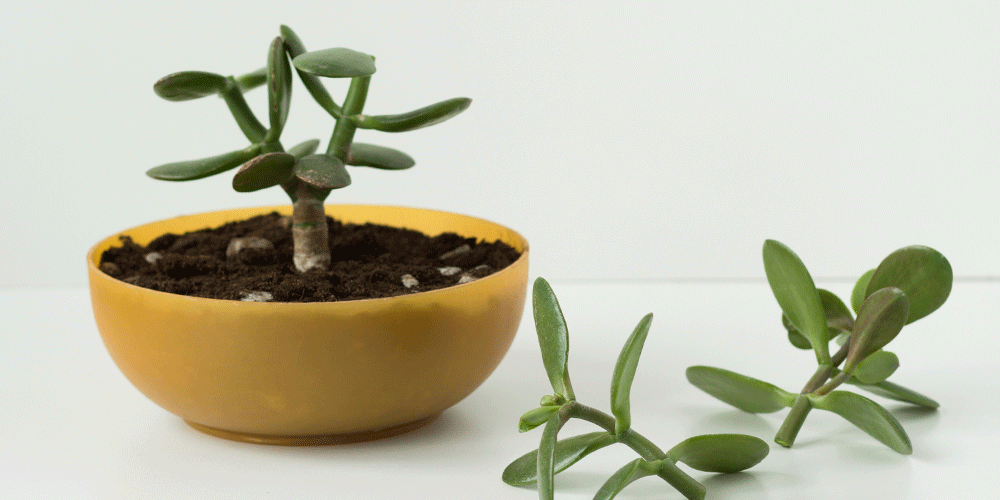
Propagating Succulents from Leaves
Succulents can be propagated in several ways. The most common method is known as vegetative propagation, which involves creating a clone of your original plant using your old one. Plant offsets, leaf cuttings, stem cuttings from a mature plant can be used in this process.
Propagating succulents from leaves is a rewarding and surprisingly simple process that allows you to expand your succulent family with ease.
1. Choose Healthy Parent Plants:
Start your propagation journey by selecting healthy, mature succulents as your ‘parent plants’. Look for leaves that are plump, firm, and free from any signs of damage or disease. Healthy parent plants ensure robust and viable leaf cuttings.
2. Gentle Leaf Removal:
With a gentle touch, carefully remove a healthy leaf from the parent plant. A clean break is crucial for successful propagation. Wiggle the leaf back and forth until it detaches naturally, ensuring a clean break at the base of the leaf.
3. Allow Callus Formation:
Place the detached leaves in a dry, shaded indoor area for a day or two to allow the cut ends to callus. Callusing helps prevent rot when the leaves are eventually planted in soil.
4. Choose the Right Propagation Medium:
Succulents thrive in well-draining soil. Choose a specialized succulent or cactus mix, or create your own by combining potting soil with perlite or sand. Fill a shallow tray or pot with the chosen medium for leaf propagation.
5. Plant the Leaves:
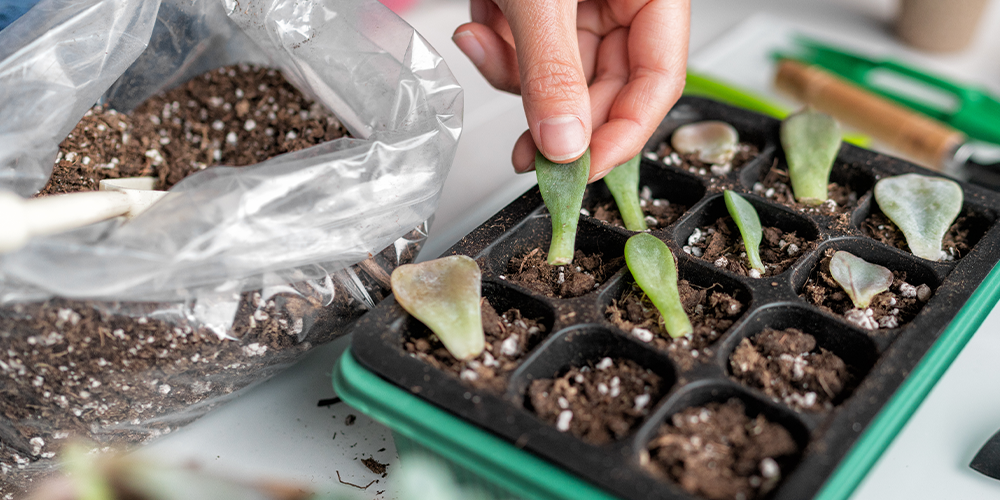
Gently place the callused end of the succulent leaf into the soil, burying it about half an inch. Ensure the leaf makes good contact with the soil to promote root development. If you’re propagating multiple leaves, space them adequately to avoid overcrowding.
6. Water Sparingly:
Watering is a delicate balance in succulent propagation. Mist the soil lightly or use a watering can with a fine spout to dampen the soil without saturating it. Overwatering can lead to rot, so err on the side of caution!
7. Patience is a Virtue:
Succulent propagation is a waiting game. Place the tray or pot in a bright, indirectly lit indoor setting and exercise patience. Over time, you’ll witness the magical transformation as tiny roots emerge from the base of the leaf and new rosettes begin to form.
8. Transplanting New Growth:
Once the propagated succulents have developed a substantial root system and a cluster of leaves, they are ready for transplanting. Gently remove them from the propagation tray and transplant into individual pots.
Easiest Indoor Plants To Propagate
The Jade plant is a great plant to start your propagation journey with as it is extremely easy to propagate. Other houseplants to propagate in Bismarck include echeveria, spider plant, pothos, and philodendron. Simply admire the beauty of these tiny spiders, or you can use them to propagate more plants.
If you’re eager to embark on this green-thumb journey, here’s a guide to the easiest indoor plants to propagate successfully.
- Spider Plant (Chlorophytum comosum):
Spider plants are renowned for their resilience and prolific nature, making them an excellent choice for beginners. Propagating spider plants involves separating the offsets or “pups” that emerge from the main plant. These offsets can be potted individually to grow into new, thriving spider plants.
- Pothos (Epipremnum aureum):
Pothos, with its trailing vines and heart-shaped leaves, is not only a popular indoor plant but also a propagation-friendly companion. Snip a healthy vine just below a node, place it in water until roots develop, and then transplant it into soil for a flourishing new pothos plant.
- Snake Plant (Sansevieria trifasciata):
Snake plants, known for their air-purifying qualities, are incredibly resilient and straightforward to propagate. Cut a healthy leaf into sections, ensuring each section has a bit of the rhizome. Plant these sections in well-draining soil, and soon you’ll have new snake plant offspring.
- ZZ Plant (Zamioculcas zamiifolia):
The ZZ plant’s glossy, dark green leaves add a touch of sophistication indoors. Propagating ZZ plants involves removing healthy leaflets and placing them in water until roots form. Once rooted, transfer them to soil for continued growth.
- Jade Plant (Crassula ovata):
Jade plants, with their fleshy leaves and tree-like appearance, are not only aesthetically pleasing but also easy to propagate! Snip a healthy leaf, let it dry for a day or two to form a callus, and then plant it in well-draining soil. With proper care, your jade plant cuttings will develop into new, vibrant plants.
- African Violet (Saintpaulia):
Known for their charming, colorful flowers, African violets are surprisingly simple to propagate. Rooting African violet leaves in water or directly in soil can lead to the development of new plants that mirror the characteristics of the parent plant.
- Rubber Plant (Ficus elastica):
Rubber plants, with their large, glossy leaves, are not only visually-striking but also amenable to propagation. Take a healthy stem cutting, let it root in water, and then transplant it into soil. With consistent care, your rubber plant cuttings will grow into robust, leafy additions to your indoor garden.
- Aloe Vera (Aloe barbadensis miller):
Aloe vera, prized for its soothing gel, is also an excellent candidate for propagation. Offset pups that emerge around the base of the plant can be gently separated and planted in their own containers, creating new aloe vera plants ready to thrive!
1. Remove some leaves from your mature plant.
Remove a few leaves from your succulent plant, twisting gently to remove the entire leaf without tearing or damaging your mature houseplant. Pull the entire leaf off cleanly. If you don’t pull off the entire leaf, your succulent houseplant will be more susceptible to dying. This isn’t something you want, or you wouldn’t try to be cloning it in the first place!
2. Dry off your succulent leaves.
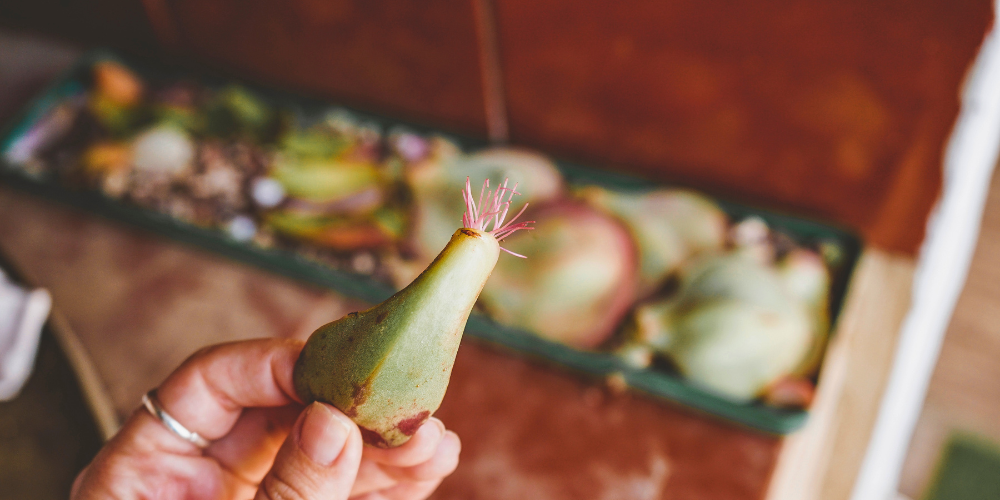
Once you’ve successfully completed your leaf removal, set the leaves aside in any clean container or tray after removing them from your mature plant (glass is best). Before doing anything else with your cutting or leaf, let it dry out a little bit. To allow the leaf or cutting to scab over, you should leave it alone for a couple of days, depending on the amount of heat and light requirements you’re dealing with from your plant. This step is especially important because a succulent cutting that is too damp won’t take to the soil. Once you start noticing the cutting shrivel up, it’s time to start watering.
3. Establish roots: let’s grow!
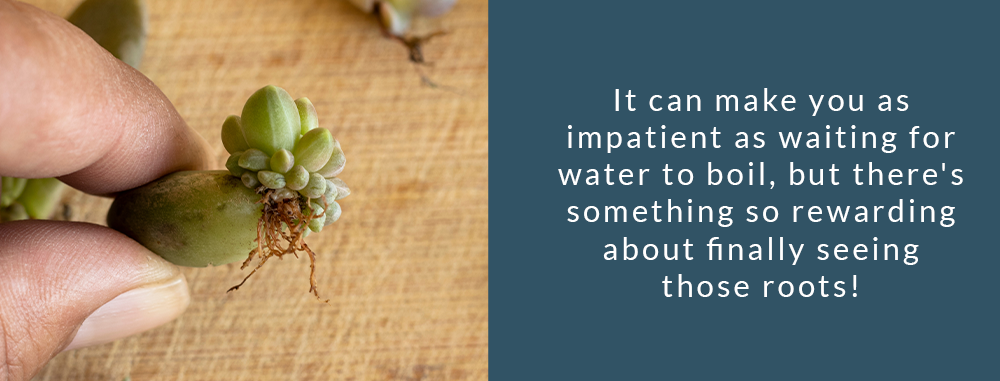
Now, the anticipation begins! The next few weeks will be spent watering your succulent leaves and staring at them until they grow roots. It can make you as impatient as waiting for water to boil, but there’s something so rewarding about finally seeing those roots! Since your cuttings are pretty much full-grown houseplants already, all they need is to be planted and watered as needed, and they’ll grow all-new roots. After cutting, some gardeners dip their stems into rooting hormone, available at our Garden Center, to encourage stronger root growth. The process of rooting usually takes around 3-4 weeks, but it can take longer for some plants and less time for others. Cuttings can be potted when their roots reach 1 to 2 inches in length.
4. Plant your succulent babies.
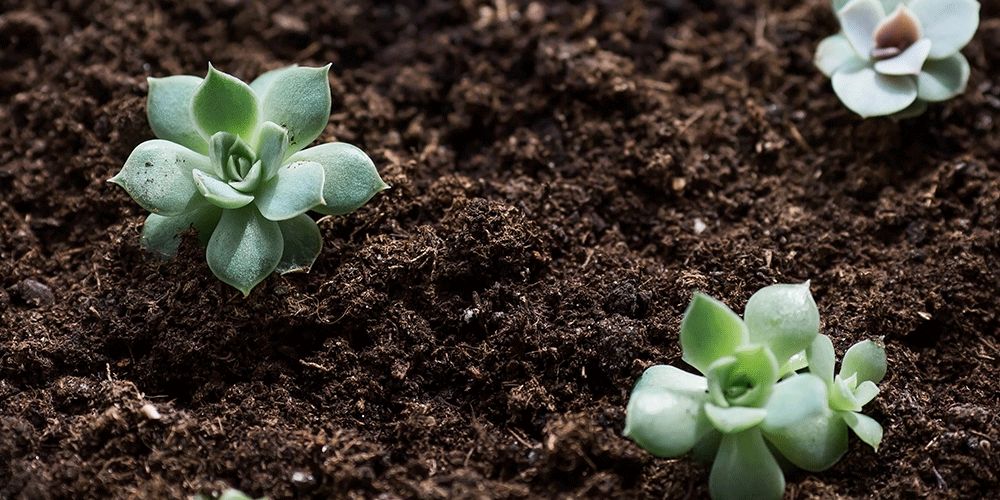
Cover the roots of your new succulent with soil as soon as you see them. It’s best if your succulent baby has a deep root system before repotting it. Place it in its new home once ready, and provide water and succulent-friendly fertilizer for your plant as needed.
5. Provide proper soil and drainage.
Your propagated succulent will love a good soil that allows it to expand as needed and provide proper drainage to keep your soil moist but not soggy. You can achieve this by cutting holes in the bottom of your planter to allow the water to drain. Your succulent soil will also need to be rich in nutrients to help your houseplant continue to establish a strong root system. Water as needed, and give your succulent the sun it needs to thrive!
Propagating Cuttings from Tropicals
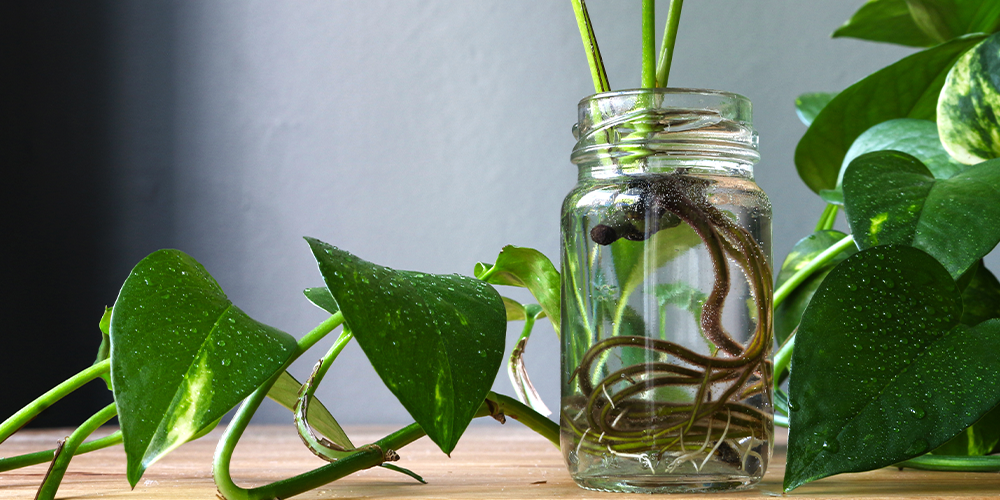
Many tropicals, especially vining plants like pothos and tradescantia, are even easier than succulents to propagate! Simply cut off a piece of the vine with at least 3 leaves on it—but the more, the better. Remove the lowest leaf near the cut line and place the cutting in a glass of water, ensuring the cut area and the node with the missing leaf are (and remain) fully submerged.
Keep it on a sunny windowsill, changing the water periodically, and within a few weeks you’ll notice roots emerging from the cutting! Once there are a few strong roots visible on the cutting, it’s ready to transplant into a pot of soil. Keep recently-transplanted cuttings well-watered for a few weeks to help ease the transition, and soon your new plant will flourish.
- Collecting Healthy Cuttings:
Begin your tropical propagation adventure by selecting healthy and vigorous parent plants. Look for sections of the plant that exhibit robust growth, free from pests or diseases.
- Pruning Techniques:
Different tropical plants may require varied pruning techniques for successful propagation. For instance, plants with woody stems—use clean, sharp pruning shears to take your cuttings. For softer-stemmed tropicals, a clean snip with scissors is often sufficient.
- Aroids—Rooting in Water:
Tropicals such as philodendrons and pothos, which belong to the aroid family, are well-suited for water propagation. Place your cuttings in a container of water, ensuring that a node (the point where leaves attach to the stem) is submerged. Once roots develop, transplant them into soil for continued growth.
- Fiddle Leaf Fig (Ficus lyrata) – Soil Propagation:
Known for its large, dramatic leaves, the fiddle leaf fig can be propagated by taking stem cuttings and planting them directly in well-draining soil. Ensure the cuttings have at least one leaf and one node, burying the node in the soil for root development.
- Tropical Flowers – Re-growing from Cuttings:
For tropical flowers like hibiscus or plumeria, propagate by taking stem cuttings with at least two nodes. Remove excess leaves and dip the cut end in rooting hormone before planting in well-draining soil. Keep the soil consistently-moist until roots form.
- Bird of Paradise (Strelitzia) – Division Propagation:
Bird of paradise plants, known for their striking foliage, can be propagated through division. Carefully divide the plant at the root level, ensuring each division has both roots and leaves. Transplant the divisions into individual containers.
- Bromeliads—Pup Propagation:
Bromeliads, with their unique rosette form, often produce offsets or “pups.” Gently separate these pups from the parent plant and transplant them into their own containers. Bromeliad pups will grow into mature plants with time and care.
- Orchids—Keiki Propagation:
Some orchids produce small offshoots called keikis. These keikis can be carefully removed from the parent plant once they have developed roots. Transplant them into orchid mix and provide the appropriate care for orchid propagation success.
- Ti Plant (Cordyline fruticosa) – Stem Cuttings:
For the vibrant ti plant, take stem cuttings with a few leaves attached. Remove lower leaves to expose a node, dip the cut end in rooting hormone, and plant in well-draining soil. Keep the soil consistently-moist until roots fully establish.
Propagating houseplants seems like a full-time job the first time you hear about it, but it’s actually easy as can be. Visit us at Plant Perfect in Bismarck, North Dakota, to start propagating your succulents today!