
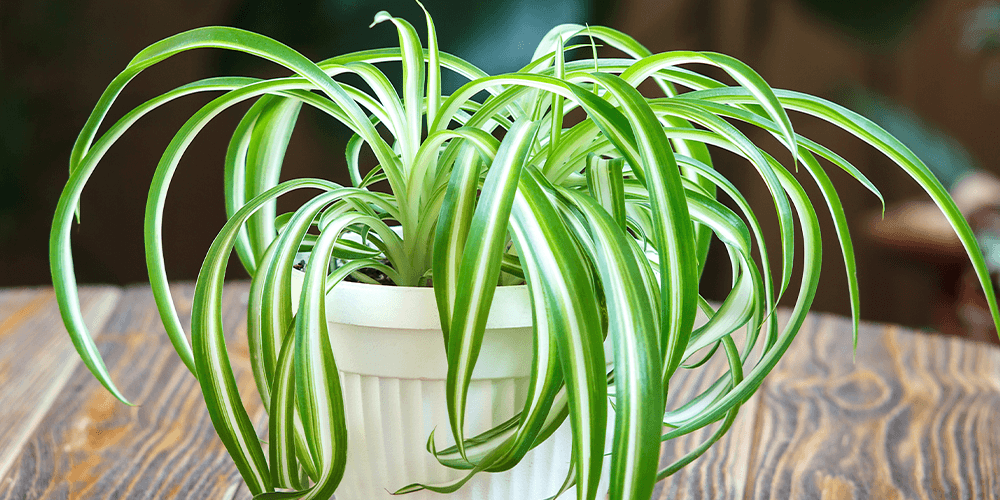
Spider Plants are both charming and one of the easiest houseplants to grow indoors. They’re ideal for beginner gardeners and offer unique rewards for advanced green thumbs too. If you’ve ever wondered what makes these indoor plants so popular, or perhaps you’re looking to weave a new perspective on this favorite—here are a few threads to appreciate Spider Plants more fully!
They’re Simply Beautiful
Every indoor plant has a unique style that brings a room to life, and Spider Plants are no exception. They may not have bold flowers like other tropicals, but their bright, bushy leaves are attractive all on their own. They shoot ribbons of white and green leaves from the soil and let them sway freely in the air like grass. In the summer, they display small white flowers on long stems and produce iconic baby plants that dangle from the mother like spiders on a web.

They’re Easy to Grow
Spider Plants can adapt to a variety of indoor conditions. They tolerate light ranging from semi-shade to partial direct sun and handle a broad span of temperatures. They have their own preferences when it comes to watering, but they won’t croak if you miss a day or let them dry out too much. Of course, if you want them to thrive, you can treat them to their ideal conditions:
Water: Water your spider plant once the top inch of soil is dry and a little less during the winter.
Temperature: House them in average room temperature, though they tolerate a range of 55 and 80°F.
Light: They prefer bright to moderate indirect light and may scorch under direct sun.
Soil: They thrive in a well-draining potting mix.
They’re Versatile
Their bushy habit makes them ideal for a hanging basket. Given the freedom to dangle, the leaves arch beautifully over a pot, and the baby spiders hang freely in interesting shapes below. They also do well sitting on a table or any hard surface. If they get too bushy, you can cut them back, prune away the baby spiders and use them to propagate new plants, as you’ll learn below.
The perfect plant for almost anywhere inside your home and for any level of gardener.

They’re Easy to Propagate
Spider Plants are truly one of the most generous houseplants around. Once mature, they begin to send out stems with miniature plants waiting to contact soil and sprout roots of their own. Simply admire the beauty of these tiny spiders, or you can use them to propagate more plants. How so? Once they reach two inches of diameter, cut them away from the mother and place them in a pot of soil of their own. Or, for better success, pot them while they’re still attached to the mother and sever the ties once the plantlet grows roots.
They Purify Your Air
Spider Plants made it onto NASA’s list of top air-purifying houseplants—up there with those heavy breathers like Boston ferns and English ivy. Spider plants remove formaldehyde, xylene, and toluene from the air in your home, though you’d need more than a few to experience a significant benefit. But like all houseplants, the spider plant also exhales sweet, fresh oxygen, which can boost our moods and refresh stagnant air indoors, especially during the winter.

They’re Tough
Spider Plants are not prone to getting pests or having any problems. The only thing you might find is occasional brown tips on the end of leaves. Common chemicals like fluoride in tap water can accumulate in the soil and cause this to happen. If it does, you can clip the brown tips off. If the problem persists, you can purge the soil of fluoride buildup by repotting it in fresh soil.
Spider Plant History
The Spider Plant originates in the tropics of southern Africa. It was likely brought to Europe by the adventurous Swedish plant explorer Carl Thurnberg after his travels to South Africa in the 1770s. In the nineteenth century, it became a popular houseplant in Victorian England, known as the “ribbon plant” for its beautiful rosette leaves.
The Spider Plant has been charming plant lovers for many centuries. They are tough, resilient, versatile, and beautiful – the perfect plant for almost anywhere inside your home and for any level of gardener. If you’re looking to add one to your collection, you don’t have to venture to South Africa. Visit our garden center in Bismarck. They are only one of many houseplants we carry!