

Spring is almost here, and that means many things ahead for your plants! Before you know it, it will soon be time to transition your precious seedlings into the great outdoors. But it’s not as simple as kissing them goodbye and sending them out the door. They need a time of transition, which includes specific steps and practices. Here’s how to make sure your transplants are successful!
How Do You Transition Seedlings Outside?
For any seedlings that have grown up in the comfort of a warm home, transitioning to the wide world outside is a major change. Suddenly, they’re exposed to the sun, wind, rain, and cold. Don’t worry, though! They have what it takes to survive but need our help to make a successful move. A gradual change, or what some call “hardening off,” is a vital part of the process.
What Does It Mean to Harden Off Your Seedlings?
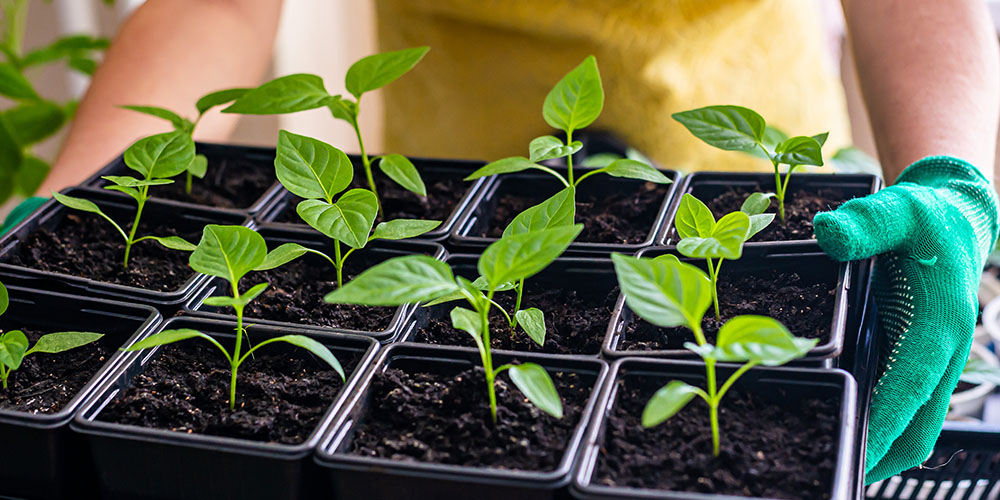
Hardening off is slowly giving your seedlings a taste of the outdoors before booting them out for good. Over the course of 10 days, expose them to more sunlight and more hours outside until they’re comfortable there for the whole day. If you skip this process, your seedlings may be shocked by the sudden shift and die. Here’s how to help their transition successfully:
Day 1: Put your seedlings outside in the shade for 2 hours.
Day 2: Put your seedlings in the dappled shade for 2 hours.
Day 3: Put your seedlings outside in the sun for 2 hours.
Days 4-10: Slowly increase their time outside under the sun for one hour daily until they’ve spent at least 8 hours outside.
Now they’re ready for transplanting!
Extra Tips for Hardening Off Seedlings
- Remember that seed trays dry out quickly from the sun and wind. So keep your seedlings well-watered.
- Keep them sheltered from strong winds during the initial days of hardening off. With gradual wind exposure, their stems will stiffen up.

When Do You Transplant Seedlings Outside in Bismarck, ND?
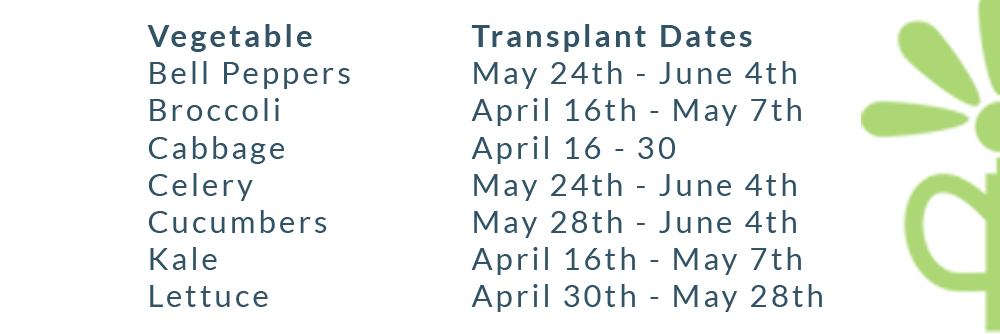
Typically the last frost date in Bismarck falls around May 14th. Cold-season crops, like lettuce, kale, cabbage, and broccoli, can all handle a light frost. You can transplant these hardy vegetables outdoors a few weeks before the last frost date.
Warm-season crops must wait until after May 14th, sometimes even a week or two after that. In particular, tomatoes, bell peppers, celery, and cucumbers benefit from extra time indoors. They’re better suited to make a move once the nights and soil are warmer by the end of May. Here is a list of recommended transplant dates for each vegetable:
Tips for Moving Seedlings into Your North Dakota Garden
Hardening off and selecting the correct dates is only half of the journey of transitioning seedlings. A successful seedling transition also depends on how you do it on the big day.
Here’s our advice:
- Shade is Your Friend: choose an overcast day and keep your seedlings in the shade while you are not working with them. This keeps them comfortable and moist during this stressful transition time.
- Lay Out and Dig First: keep your seedlings in the trays while you lay out your plots and dig holes. The less time they spend uprooted, the better!
- Remove Them With Care: don’t pull on the stems. Instead, squeeze the bottom of the trays to pop them out. Use a butter knife if necessary, and keep as much soil with the roots as possible.
- Transplant them at the Correct Height: except for tomatoes, ensure you plant your seedlings at the same height they were growing. Tomatoes can be planted with up to one-half of the stem buried, encouraging more rooting and, ultimately, more fruiting.
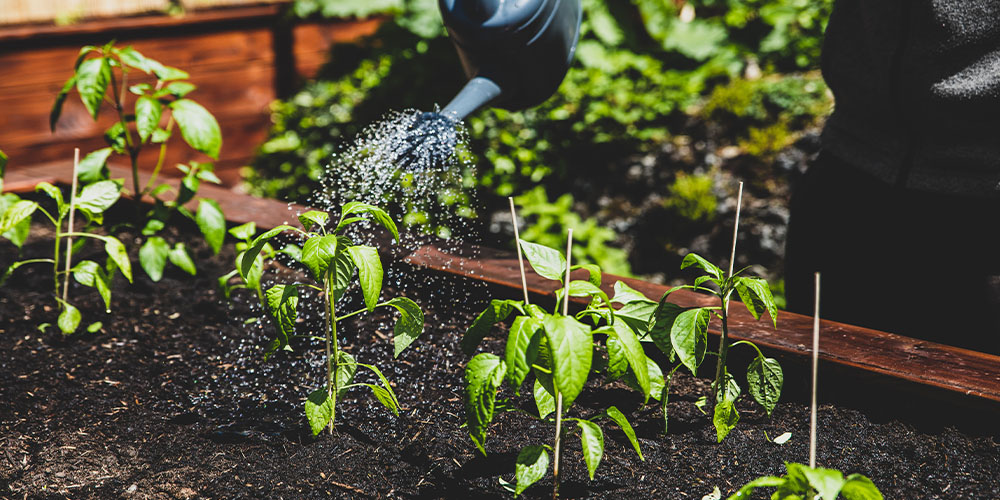
- Water, Firm Up, and Mulch: don’t forget to water your seedlings after their big transition, and gently firm up the soil to gently eliminate air pockets. Spread an optional layer of grass clippings or straw around your new transplants to retain moisture and protect the soil.

Transitioning Seedlings into Container Gardens
Growing vegetables in containers is a great way to add space to your garden and give some of your vegetables extra heat. Tomatoes, eggplants, and bell peppers benefit from extra warmth from the above-ground roots. A downside is that these water-loving plants will dry out faster in a container. Fast-growing crops like peas and lettuce are good choices for container growth.
How to Ensure Success after Transitioning Seedlings in North Dakota
Remember to water your new transplants daily for the first week after and every second day for the second week. If we get a surprise frost late in the year, ensure you cover them overnight with a blanket or tarp. Also, if rabbits or deer are present in your area, fence off your garden before transplanting.
For more advice on how to transition seedlings into your Bismarck, ND garden, or to grab some extra supplies, visit Plant Perfect today!